
DATA PROTECTION
Data protection laws exist to strike a balance between the rights of individuals to privacy and the ability of organisations to use data for the purposes of their business. The Data Protection Act 1984 introduced basic rules of registration for users of data and rights of access to that data for the individuals to which it related. These rules and rights were revised and superseded by the Data Protection Act 1998 which came into force on 1st March 2000.
READ MORE
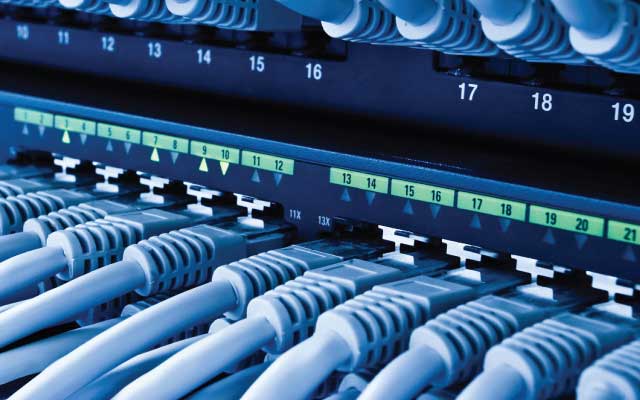
NETWORK (LAN & WIRELESS)
A computer network or data network is a telecommunications network that allows computers to exchange data. In computer networks, networked computing devices pass data to each other along data connections. Data is transferred in the form of packets. The connections (network links) between nodes are established using either cable media or wireless media.
READ MORE

INFRASTRUCTURE SOLUTIONS
Companies struggle with delivering new applications to keep pace with the demands of business. Globalization, mobility, off-shoring and regulatory compliance all require upgrading mission-critical business applications for end users.
READ MORE

SERVER & STORAGE
A storage server is a type of server that is used to store, access, secure and manage digital data, files and services. It is a purpose built server used for storing and accessing small to large amount of data over a shared network or through the Internet.
READ MORE

NETWORK & ENDPOINT SECURITY
In network security, endpoint security refers to a methodology of protecting the corporate network when accessed via remote devices such as laptops or other wireless and mobile devices. Each device with a remote connecting to the network creates a potential entry point for security threats. Endpoint security is designed to secure each endpoint on the network created by these devices.
READ MORE

NETWORK & SERVER RACKS
A rack server, also called a rack-mounted server, is a computer dedicated to use as a server and designed to be installed in a framework called a rack. The rack contains multiple mounting slots called bays, each designed to hold a hardware unit secured in place with screws. A rack server has a low-profile enclosure, in contrast to a tower server, which is built into an upright, standalone cabinet.